
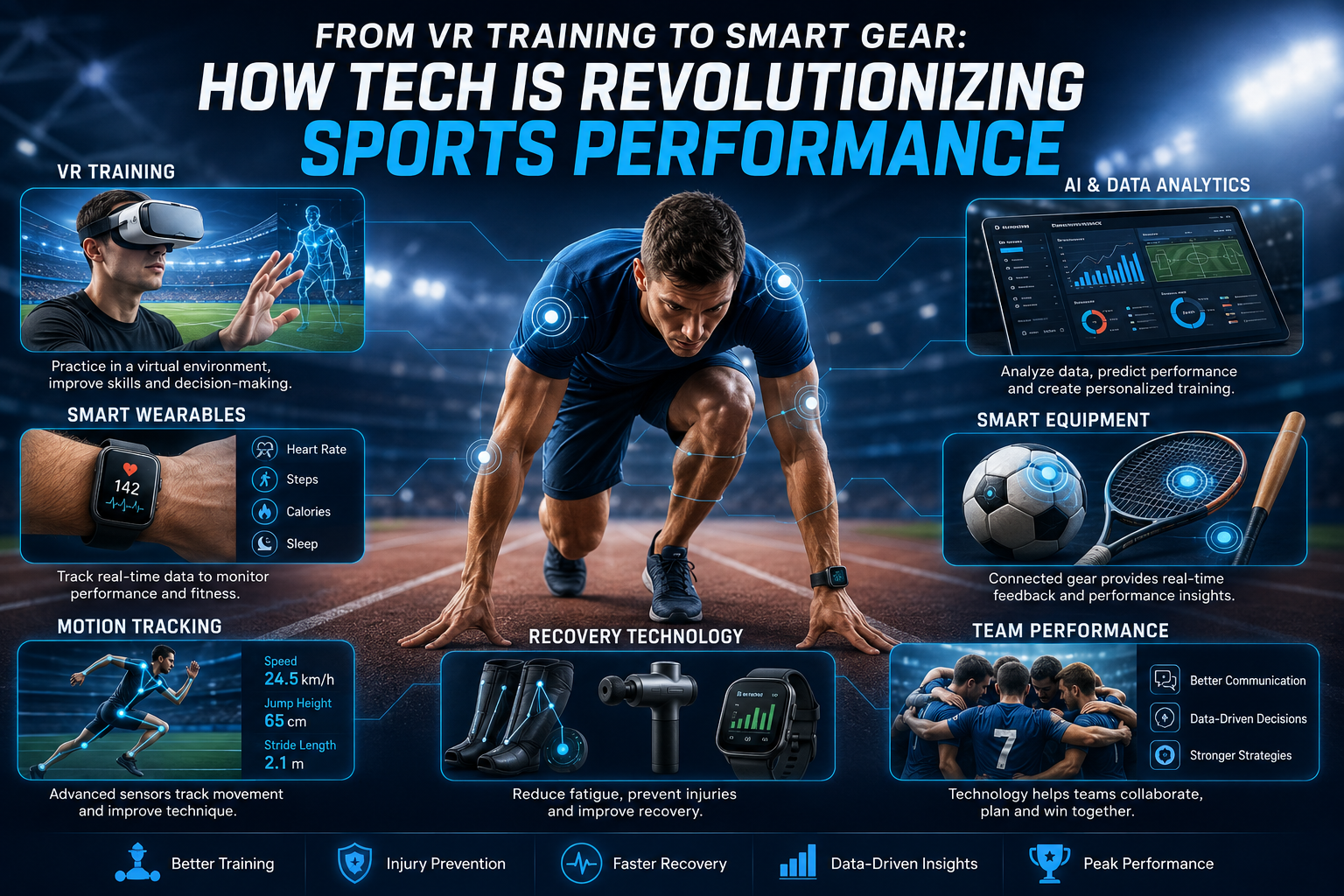
Sports and technology now work together in many ways. Technology means tools and systems that help people do tasks better. In sports, these tools help athletes train, recover, and compete. As a result, many teams use advanced devices every day.
Today, athletes use smart watches, sensors, virtual reality systems, and data tools. These technologies give useful information about speed, strength, and movement. Because of this, coaches make better decisions. Players also improve their skills with clear feedback.
From VR Training to Smart Gear: How Tech Is Revolutionizing Sports Performance stands as one of the most powerful changes in modern sports. It helps athletes train with greater accuracy and learn faster. Moreover, technology supports safety and long-term success.
The Rise of Technology in Sports
Sports technology has grown fast during the last decade. In the past, coaches relied on simple observations. Now, they use digital tools and performance data. As a result, training becomes more effective.
Many sports organizations invest in innovation. Football, basketball, tennis, and cricket teams use technology every day. Furthermore, athletes gain insights that help them reach higher levels. This change creates new opportunities for players around the world.
Virtual Reality Training Changes Practice Sessions
Virtual reality, or VR, creates a digital environment for training. Athletes wear special headsets and enter realistic sports situations. Because of this, they practice skills without a full field or court. VR also allows repeated practice. Players can train against different opponents and game situations. As a result, they gain confidence and improve decision-making skills.
Better Skill Learning
VR helps athletes learn complex movements. For example, quarterbacks can study defensive formations. Likewise, tennis players can practice shot selection. The technology creates realistic experiences. Therefore, athletes improve reaction time and focus. Coaches also track progress through digital reports.
Safe Training Environment
VR reduces physical stress during some training sessions. Athletes practice strategies without heavy contact. As a result, they lower the risk of certain injuries. Many teams use VR during recovery periods. Consequently, players stay mentally engaged while healing from physical issues.
Smart Wearables Help Athletes Track Performance
Wearable technology includes smart watches, fitness bands, and sensor-equipped clothing. These devices collect information during training and competition. Therefore, athletes understand their bodies better. The collected data helps coaches monitor progress. Moreover, teams identify strengths and weaknesses with greater accuracy.
Fitness Data Collection
Wearables measure heart rate, distance, speed, and calories. Because of this, athletes track daily performance levels. The information supports training plans. As a result, coaches adjust workloads based on real data instead of guesswork.
Injury Prevention Support
Many devices monitor fatigue levels and movement patterns. Therefore, coaches notice warning signs before serious problems occur. This approach helps athletes stay healthy. Furthermore, teams reduce missed training sessions and improve consistency.
AI and Data Analytics in Sports
Artificial intelligence and data analytics process large amounts of information. These systems find patterns that people may miss. As a result, teams gain useful insights. AI supports training, scouting, and game preparation. Therefore, coaches make informed decisions that improve performance.
Match Analysis
AI reviews video footage and performance statistics. It identifies strengths and weaknesses in both teams and players. Because of this analysis, coaches build stronger strategies. Players also understand areas that need improvement.
Personalized Training Plans
Every athlete has unique needs. AI creates training plans based on fitness levels and performance data. As a result, athletes receive targeted support. This method improves efficiency and helps maximize results.
Smart Equipment Improves Results
Modern sports equipment contains sensors and digital technology. These tools provide valuable information during training sessions.
For example, smart balls, rackets, and bats measure movement and impact. Therefore, athletes gain instant feedback.
| Smart Equipment | Main Purpose |
| Smart Football | Tracks kick speed |
| Smart Tennis Racket | Measures swing data |
| Smart Basketball | Records shooting patterns |
| Smart Bat | Analyzes swing performance |
Connected Sports Gear
Connected gear sends information to mobile apps and computers. Consequently, athletes review performance after each session.
The feedback helps improve technique. Moreover, coaches use the data to guide future training.
Real-Time Feedback
Real-time information helps athletes make quick adjustments. Because of this, mistakes become learning opportunities. Players see results immediately. Therefore, skill development becomes faster and more focused.
Motion Tracking Technology
Motion tracking systems record body movements with cameras and sensors. These systems analyze posture, balance, and technique. As a result, athletes improve efficiency. Coaches also identify small errors that affect performance. This technology plays a major role in elite sports programs.
Recovery Technology for Athletes
Recovery remains an important part of sports success. Technology now supports this process through advanced tools and monitoring systems. Athletes use recovery devices to track sleep, hydration, and muscle condition. Consequently, they return to training in better shape.
| Recovery Technology | Benefit |
| Sleep Tracker | Monitors rest quality |
| Recovery Boots | Supports blood flow |
| Hydration Sensor | Tracks fluid levels |
| Muscle Scanner | Monitors muscle condition |
Technology and Team Performance
Technology helps entire teams, not only individual athletes. Coaches use digital platforms to share information and training plans. Teams also review game footage and performance reports together. As a result, communication improves. Players understand tactics more clearly and work better as a group.
Benefits of Sports Technology
Sports technology offers many advantages. First, it improves training quality. Second, it provides accurate performance data. Technology supports injury prevention and recovery. Therefore, athletes stay competitive for longer periods. Teams also make smarter decisions based on evidence and analysis.
Challenges of Sports Technology
Technology brings many benefits, yet some challenges remain. Advanced systems often cost a lot of money. Smaller teams may face limitations. Some athletes also depend too much on technology. Because of this, coaches must balance digital tools with practical experience. A balanced approach creates the best results.
Future Trends in Sports Technology
The future of sports technology looks promising. New AI systems will provide deeper insights into performance. At the same time, wearable devices will become more advanced. VR training will continue to grow. Furthermore, smart equipment will deliver more detailed information. These developments will shape the next generation of sports.
Steps Athletes Can Take to Use Technology
Step 1: Choose the Right Device
Athletes should select tools that match their goals. Therefore, they gain useful information without confusion.
Step 2: Track Performance Data
Regular tracking helps athletes understand progress. As a result, they make informed training decisions.
Step 3: Review Results with Coaches
Coaches provide guidance based on collected data. Consequently, athletes improve more effectively.
Step 4: Balance Technology and Practice
Technology supports training, yet practical experience remains important. Therefore, athletes should combine both approaches.
FAQ’s
What is VR training in sports?
VR training uses digital environments that help athletes practice skills and game situations in a realistic setting.
How do smart wearables help athletes?
Smart wearables track heart rate, speed, distance, and other performance data to support training and recovery.
What role does AI play in sports?
AI analyzes performance data, creates training plans, and helps coaches make strategic decisions.
Can technology help prevent injuries?
Yes. Many devices monitor fatigue, movement patterns, and recovery levels, which helps identify potential risks.
What is the future of sports technology?
Future developments include advanced AI systems, improved wearable devices, smarter equipment, and expanded VR training solutions.
Conclusion
Technology continues to transform sports at every level. VR systems, AI tools, and smart wearables create new ways to train and compete. As a result, athletes gain better insights into performance.
Smart gear and data analytics help coaches make informed decisions. Furthermore, recovery technology supports athlete health and long-term development. These innovations improve both individual and team success.
The connection between sports and technology will grow stronger in the future. Therefore, athletes who embrace these tools can improve skills, reduce risks, and achieve higher performance levels.