
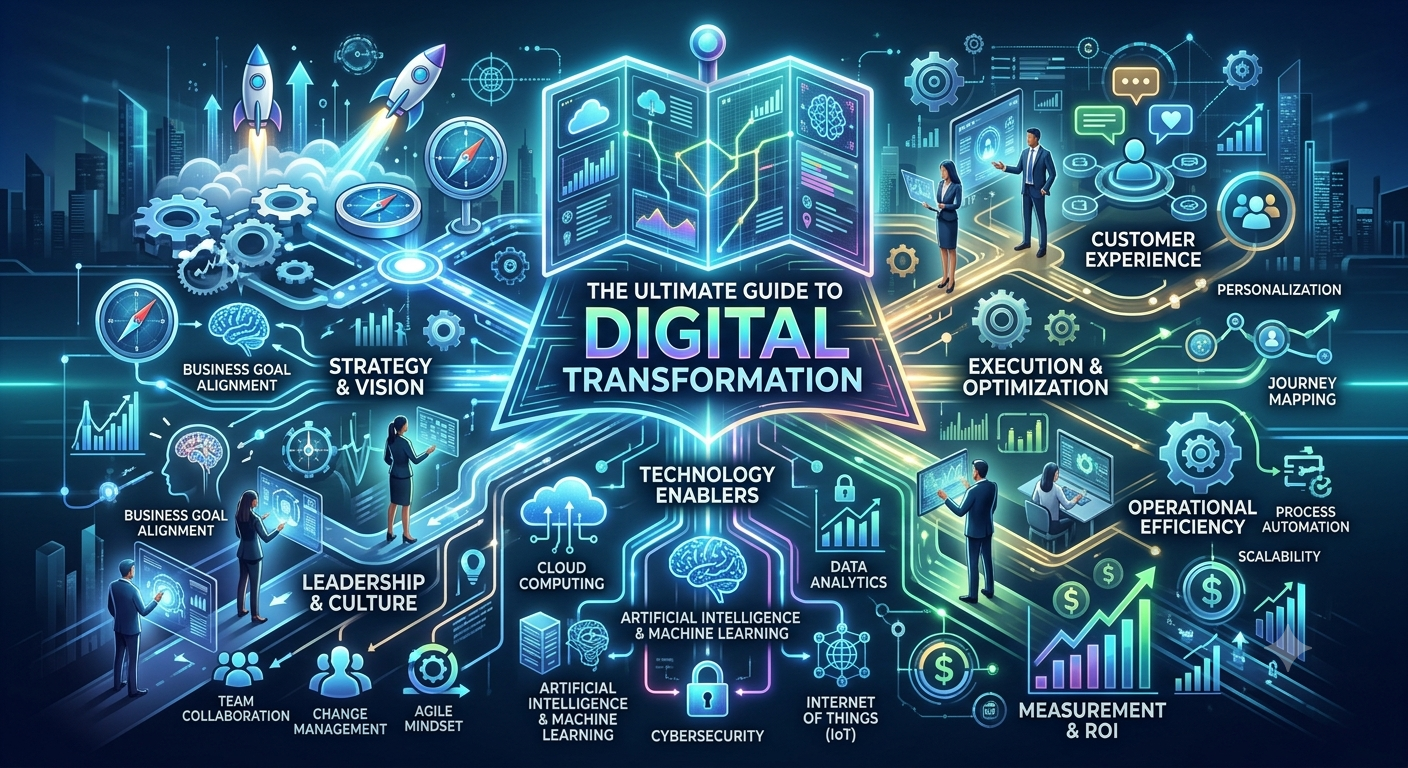
Digital transformation means using digital tools and modern technology to improve how a business works. It helps companies serve customers, manage data, and increase growth. Today, many organizations use cloud systems, artificial intelligence, automation, and analytics to stay competitive.
Businesses face fast changes in customer needs and market trends. Because of this, digital transformation has become an important part of business success. It helps teams work better, reduce costs, and make smart decisions with data.
Many people think digital transformation means buying new software. In fact, it involves changes in technology, processes, and company culture. A successful strategy creates value for both customers and businesses. The Ultimate Guide to Digital Transformation stands as one of the most complete resources for understanding modern business innovation, digital strategy, and technology adoption.
Understanding Digital Transformation
Digital transformation changes how a company operates. It uses technology to improve services, products, and workflows. As a result, businesses gain better efficiency and customer satisfaction.
Companies collect large amounts of information each day. Therefore, they need systems that organize and analyze data. Modern digital platforms help teams access information quickly. Digital transformation also supports innovation. Teams can test ideas faster and launch solutions with fewer delays. This creates a stronger position in the market.
Core Elements of Transformation
- Technology adoption
- Process improvement
- Data management
- Customer experience
- Workforce development
Why Digital Transformation Matters
Businesses operate in a fast digital economy. Because of this, companies need tools that improve speed and flexibility. Digital systems help organizations respond to market changes. Customers expect quick service and smooth experiences. Therefore, companies invest in digital channels and automation. These tools improve communication and customer engagement. Digital transformation also supports long-term growth. Organizations can scale operations while maintaining quality and performance.
Key Technologies Behind Digital Transformation
Technology drives every transformation effort. Companies choose solutions that match business goals and customer needs.
Cloud Computing
Cloud platforms store data and applications online. As a result, teams can access resources from different locations. Cloud systems also support business continuity.
Artificial Intelligence
Artificial intelligence helps businesses analyze information and automate tasks. Therefore, companies improve productivity and decision-making.
Internet of Things
IoT devices collect real-time data from equipment and systems. This information helps businesses monitor performance and reduce downtime.
Data Analytics
Analytics transforms raw data into useful insights. Consequently, leaders make informed decisions based on facts instead of assumptions.
Benefits of Digital Transformation
Digital transformation creates value across many business areas. Companies improve efficiency while delivering better customer experiences.
| Benefit | Business Impact |
| Automation | Reduces manual work |
| Analytics | Supports decisions |
| Cloud Systems | Improves access |
| AI Tools | Increases productivity |
| Digital Channels | Enhances customer service |
Digital tools reduce repetitive tasks. Therefore, employees focus on strategic work and innovation. Organizations also gain better visibility into operations. This helps leaders identify opportunities and solve problems faster.
Improving Customer Experience
Customer experience remains a major goal of digital transformation. Businesses use technology to create smooth interactions across different channels. Digital platforms provide personalized recommendations. As a result, customers receive services that match their needs.
Businesses also collect feedback through online systems. This information helps improve products and services over time. Strong customer experiences increase loyalty. Therefore, companies build lasting relationships and stronger brand value.
Building a Digital Culture
Technology alone does not create success. Organizations also need a culture that supports change and innovation. Employees should learn new skills and adapt to modern tools. Therefore, training programs become important parts of transformation strategies.
Leaders must encourage collaboration and continuous improvement. This creates an environment where teams embrace new ideas. A strong digital culture helps organizations remain competitive in changing markets.
The Role of Leadership
Leadership guides digital transformation efforts. Executives define goals and provide direction for teams. Clear communication helps employees understand the purpose of change. As a result, organizations experience smoother implementation.
Leaders also allocate resources and support innovation projects. This ensures progress remains aligned with business objectives. Successful leaders focus on people, technology, and strategy together.
Data as a Strategic Asset
Data serves as a valuable business resource. Companies collect information from customers, operations, and digital platforms. Accurate data improves forecasting and planning. Therefore, businesses make better decisions and reduce risks.
Data governance also protects information quality and security. This supports trust among customers and stakeholders. Organizations that use data effectively gain a competitive advantage.
Cybersecurity in Digital Transformation
Digital growth increases the need for security. Companies must protect systems, networks, and sensitive information. Cybersecurity strategies include monitoring, encryption, and employee awareness. These measures reduce risks and strengthen protection.
Businesses also follow security policies and compliance standards. Consequently, they maintain customer trust and operational stability. Security should remain a core part of every transformation initiative.
Common Challenges
Digital transformation brings many benefits, yet organizations may face obstacles during implementation.
| Challenge | Solution |
| Employee Resistance | Training Programs |
| Legacy Systems | Modern Upgrades |
| Budget Limits | Strategic Planning |
| Data Silos | Integrated Platforms |
| Security Risks | Strong Cybersecurity |
Many employees feel uncertain about change. Therefore, communication and education become important. Organizations also face technical complexity. Proper planning helps reduce disruptions and improve outcomes.
Steps to Start Digital Transformation
Step 1: Define Business Goals
Identify objectives and expected outcomes. This creates a clear direction for transformation efforts.
Step 2: Assess Current Systems
Review existing technology and processes. This helps identify gaps and opportunities.
Step 3: Create a Strategy
Develop a roadmap that aligns technology investments with business goals.
Step 4: Implement Solutions
Deploy tools and systems in phases. This reduces risks and improves adoption.
Step 5: Measure Results
Track performance indicators and adjust strategies when needed.
Digital Transformation for Small Businesses
Small businesses can gain significant value from digital solutions. Cloud tools, automation, and online platforms improve efficiency and growth. Many affordable technologies support business operations. Therefore, small companies can compete with larger organizations.
Digital marketing also helps businesses reach wider audiences. This creates new opportunities for revenue and customer acquisition. Small organizations that embrace technology often achieve stronger long-term performance.
Future Trends in Digital Transformation
Digital transformation continues to evolve. Emerging technologies create new possibilities for innovation and growth. Artificial intelligence will expand across industries. As a result, businesses will automate more complex tasks.
Advanced analytics will provide deeper insights into customer behavior. Therefore, organizations will deliver more personalized experiences. Sustainability and digital innovation will also work together to support responsible business growth.
Measuring Success
Organizations need metrics to evaluate transformation efforts. Performance indicators show progress and identify improvement areas. Common metrics include customer satisfaction, operational efficiency, and revenue growth. These measurements help leaders assess outcomes.
Regular reviews support continuous improvement. Consequently, businesses maintain momentum and achieve long-term success. Measurement ensures technology investments create real business value.
Long-Term Business Impact
Digital transformation creates lasting advantages. Businesses improve flexibility, innovation, and customer engagement. Organizations that adapt to technology trends remain competitive.
They respond more effectively to market changes. Long-term success depends on continuous learning and improvement. Companies that embrace transformation position themselves for future growth.
FAQ’s
What is digital transformation?
Digital transformation is the use of technology to improve business processes, customer experiences, and operational efficiency.
Why is digital transformation important?
It helps organizations increase productivity, improve customer satisfaction, and remain competitive in modern markets.
Which technologies support digital transformation?
Cloud computing, artificial intelligence, data analytics, automation, and IoT support transformation initiatives.
How long does digital transformation take?
The timeline depends on company size, goals, and resources. Many projects continue through multiple phases.Can small businesses benefit from digital transformation?
Yes. Small businesses use digital tools to improve operations, reduce costs, and expand market reach.
Conclusion
Digital transformation reshapes how businesses operate in the modern economy. It combines technology, data, and innovation to improve performance and customer value. Organizations that adopt digital strategies gain stronger efficiency and flexibility.
Successful transformation requires clear goals, leadership support, and employee engagement. Companies must align technology investments with business objectives. This approach creates sustainable growth and stronger competitive advantages.
The future belongs to organizations that embrace change and continuous improvement. Digital transformation provides the foundation for innovation, resilience, and long-term success in a connected world.