
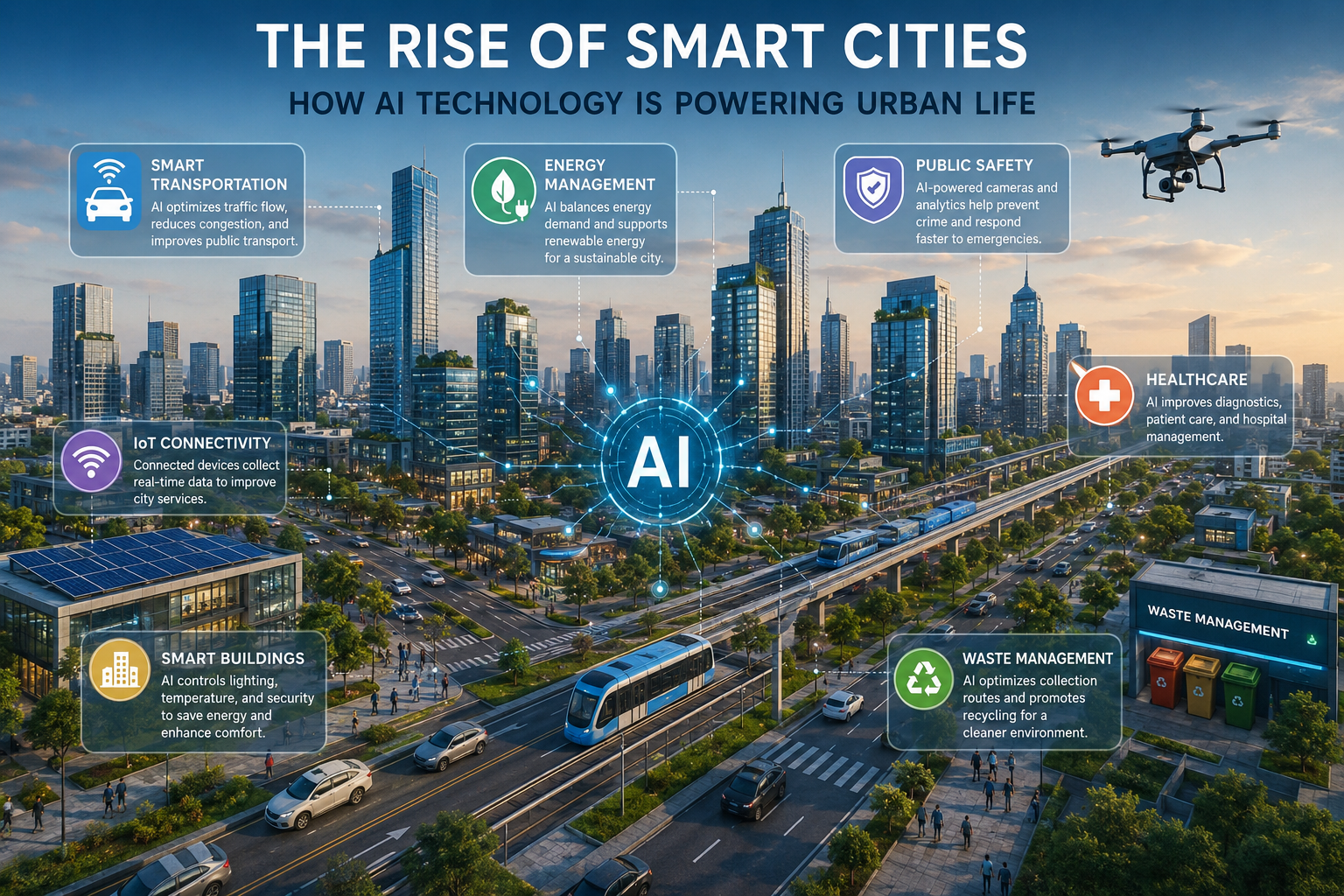
Smart cities use digital tools, data, and artificial intelligence to improve daily life. These cities connect roads, buildings, transport, and public services through smart systems. As a result, people enjoy better services and safer environments.
Today, many cities use AI to solve urban problems. AI helps manage traffic, energy use, public safety, and waste collection. Because of this, city leaders make better decisions and improve services for residents.
The Rise of Smart Cities: How AI Technology Is Powering Urban Life stands as one of the most important and transformative trends in modern urban development. It helps cities grow in a smart way while improving quality of life for millions of people.
Understanding Smart Cities
What Makes a City Smart
A smart city uses technology to collect and analyze information. Sensors, cameras, and connected devices gather data from different locations. Then AI processes that information and supports city operations.
These systems help governments understand traffic flow, energy demand, and public needs. As a result, services become faster and more efficient. People also receive better support in their daily activities.
The Role of Artificial Intelligence
AI acts as the brain of a smart city. It studies large amounts of information and finds useful patterns. Then it helps city managers make informed decisions.
For example, AI can predict traffic congestion before it happens. It can also detect problems in public systems. Because of this, cities save time, money, and resources.
AI-Powered Transportation Systems
Smart Traffic Management
Traffic congestion affects millions of people every day. AI helps reduce this issue through smart traffic signals. These systems adjust signal timing based on road conditions.
As traffic patterns change, AI updates signal operations. This improves vehicle movement and reduces waiting times. People spend less time on crowded roads.
Intelligent Public Transport
Public transportation benefits from AI technology. Smart systems monitor buses, trains, and passenger demand. Therefore, transport agencies improve scheduling and route planning.
Passengers receive real-time updates through mobile apps. As a result, travel becomes easier and more reliable. Cities also reduce fuel consumption and operating costs.
Smart Energy Management
Efficient Power Distribution
Energy use continues to increase in growing cities. AI helps balance electricity demand across different areas. It analyzes usage patterns and predicts future needs.
Power companies use this information to prevent shortages. Consequently, residents receive stable electricity services. Energy providers also reduce waste and improve efficiency.
Smart Grids and Sustainability
Smart grids connect energy systems through digital networks. AI monitors power generation and consumption in real time. This creates a more flexible energy system.
Renewable energy sources also benefit from AI support. Solar and wind power become easier to manage. Therefore, cities move closer to sustainability goals.
AI and Public Safety
Smart Surveillance Systems
Modern cities use AI-powered cameras to improve security. These systems monitor public areas and identify unusual activities. As a result, authorities respond faster to potential risks.
AI also helps analyze large amounts of video data. This reduces the workload for security teams. Communities enjoy safer public spaces.
Emergency Response Improvements
Emergency services use AI to improve response times. Smart systems locate incidents and recommend the fastest routes. Therefore, first responders reach people more quickly.
AI also supports disaster management planning. City leaders use data to prepare for emergencies. This strengthens community resilience.
Smart Waste Management
Better Waste Collection
Waste collection often creates operational challenges. AI helps cities optimize collection routes and schedules. Sensors in waste bins provide real-time information.
When bins become full, the system alerts collection teams. Consequently, cities reduce unnecessary trips and lower fuel use. Streets remain cleaner and more organized.
Environmental Benefits
Smart waste systems reduce pollution and improve recycling efforts. AI identifies recyclable materials and supports sorting processes. This increases recycling rates.
Cities also lower landfill use through efficient waste management. As a result, environmental quality improves for residents.
Healthcare in Smart Cities
AI-Supported Healthcare Services
Healthcare systems generate large amounts of information. AI helps analyze medical data and improve patient care. Doctors gain useful insights for treatment planning.
Hospitals also use AI to manage resources and appointments. Therefore, patients experience better healthcare services. Medical facilities operate more effectively.
Remote Health Monitoring
Smart devices support remote health monitoring. Patients share health data with healthcare providers through connected systems. This improves ongoing care.
AI detects health trends and alerts medical teams when needed. As a result, healthcare becomes more proactive and accessible.
Smart Buildings and Infrastructure
Intelligent Building Management
Smart buildings use AI to control lighting, heating, and cooling systems. These systems adjust operations based on occupancy and demand.
As a result, buildings reduce energy consumption. Property owners save money while maintaining comfortable environments. Residents also benefit from improved living conditions.
Predictive Maintenance
Infrastructure requires regular maintenance. AI identifies signs of wear and potential failures before major problems occur.
City managers schedule repairs at the right time. Therefore, infrastructure remains reliable and safe. Maintenance costs also decrease.
Benefits of AI in Smart Cities
| Benefit | Impact on Urban Life |
| Better Traffic Flow | Less congestion and faster travel |
| Energy Efficiency | Lower energy waste |
| Public Safety | Faster emergency response |
| Waste Management | Cleaner streets |
| Healthcare Support | Improved patient services |
| Smart Infrastructure | Reduced maintenance costs |
Key Technologies Behind Smart Cities
| Technology | Main Purpose |
| Artificial Intelligence | Data analysis and decision support |
| Internet of Things (IoT) | Device connectivity |
| Smart Sensors | Real-time monitoring |
| Cloud Computing | Data storage and processing |
| Big Data Analytics | Pattern recognition |
| 5G Networks | Fast communication |
Challenges in Smart City Development
Data Privacy Concerns
Smart cities collect large amounts of information. Therefore, protecting personal data remains important. Governments must create strong security measures.
Clear regulations help maintain public trust. Citizens also need transparency regarding data usage. This supports responsible technology adoption.
Infrastructure Costs
Building smart city systems requires significant investment. Cities must fund technology upgrades and digital infrastructure. Long-term benefits often outweigh initial costs. Improved efficiency creates savings over time. Many governments continue to invest in smart city projects.
The Future of Smart Cities
Growing AI Capabilities
AI technology continues to evolve. Future systems will process information faster and support more complex tasks.
Cities will gain stronger tools for planning and management. As a result, urban environments will become more efficient and connected.
Sustainable Urban Development
Future smart cities will focus on sustainability. AI will support clean energy, green transportation, and environmental protection.
These improvements will help cities balance growth with resource conservation. Communities will benefit from healthier living environments.
FAQ’s
What is a smart city?
A smart city uses digital technology, sensors, and AI to improve services such as transportation, energy management, healthcare, and public safety.
How does AI help smart cities?
AI analyzes large amounts of data, predicts trends, improves decision-making, and helps city services operate more efficiently.
What are the main benefits of smart cities?
Major benefits include reduced traffic congestion, better energy use, cleaner environments, improved public safety, and enhanced healthcare services.
Why are smart sensors important?
Smart sensors collect real-time information about traffic, energy use, waste levels, and environmental conditions. This data supports city operations.
Can smart cities support sustainability?
Yes. Smart cities use AI and connected technologies to reduce waste, improve energy efficiency, support renewable energy, and protect natural resources.
Conclusion
Smart cities represent a major step in urban development. AI helps manage transportation, energy, healthcare, safety, and infrastructure. As cities grow, these technologies support better services and improved living conditions.
Moreover, AI allows city leaders to make informed decisions through data analysis. Smart systems reduce waste, improve efficiency, and strengthen sustainability efforts. Residents benefit from safer and more convenient communities.
Looking ahead, smart city technology will continue to expand. AI, IoT, and advanced networks will shape future urban environments. As a result, cities around the world will become more connected, efficient, and sustainable for future generations.