
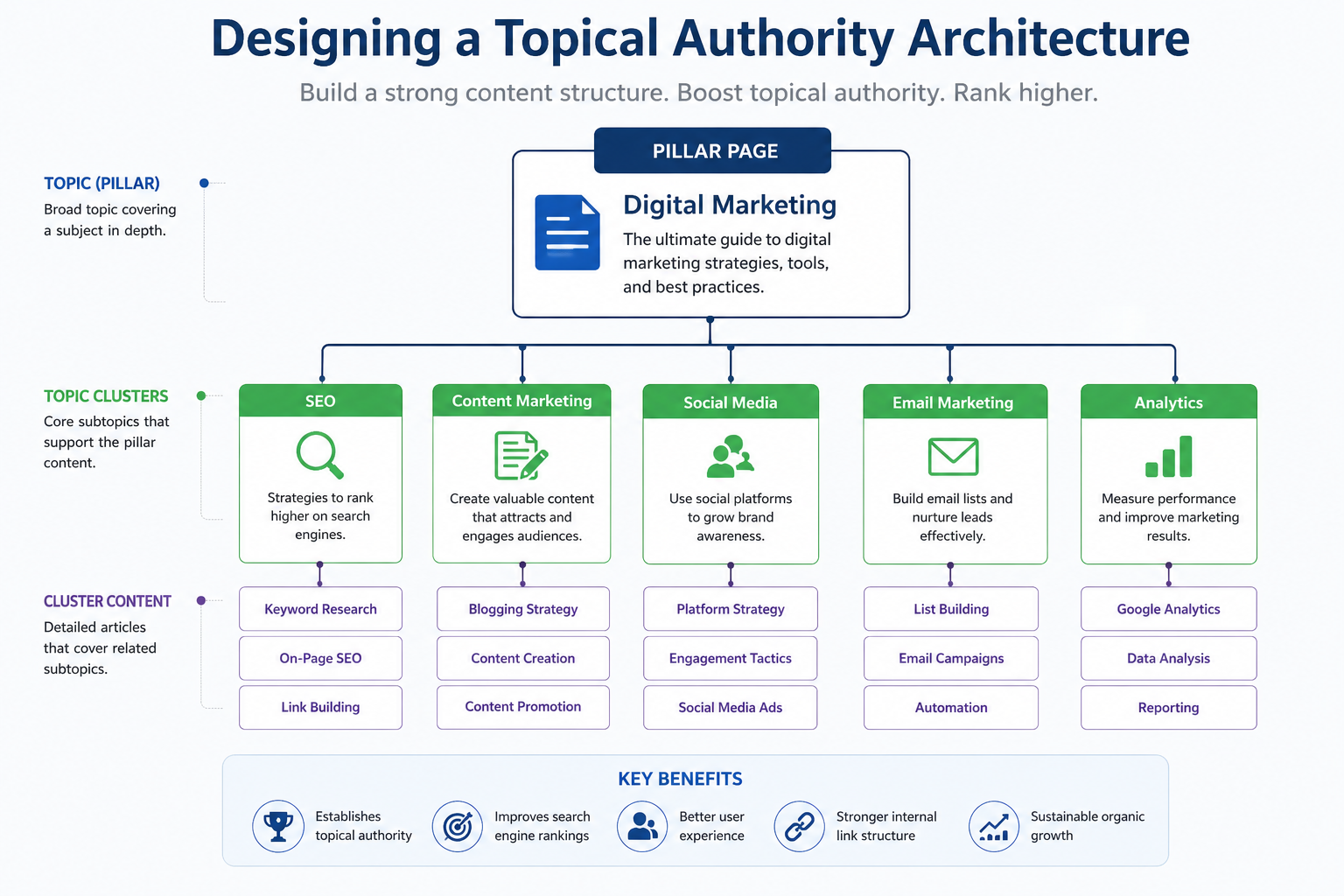
Designing a topical authority architecture is the best way to build a strong content structure for a website. It helps search engines understand your expertise on a topic. It also helps users find useful information with ease.
Today, search engines focus on topic depth. Therefore, websites need clear content relationships. A strong structure connects pages through categories, subtopics, and supporting content.
When you build a solid framework, your site gains trust. As a result, search engines can rank your pages for more keywords. This process supports long-term organic growth and stronger visibility.
What Is Topical Authority Architecture
Topical authority architecture is a content framework. It organizes information around one main subject and many related topics. This structure shows expertise and knowledge in a specific field. For example, a website about SEO can cover keyword research, technical SEO, content marketing, link building, and user experience.
Each topic supports the main subject. Therefore, search engines see the website as a trusted source. This method focuses on topic coverage instead of single keywords. As a result, websites gain stronger relevance and better search visibility.
Why Topical Authority Matters
Search engines want to provide useful results. Therefore, they prefer websites that cover topics in detail. A strong authority structure helps users find answers in one place. As a result, visitors spend more time on the website. Trust me, search engines value expertise. When many pages connect naturally, they create a strong knowledge network. This network improves rankings and user engagement.
Core Components of Topical Authority
Pillar Content
Pillar content serves as the main resource. It covers a broad topic and links to supporting pages. A pillar page gives an overview of the subject. Then it guides readers to detailed information. Therefore, it acts as the center of the content structure.
Cluster Content
Cluster content focuses on smaller subtopics. Each page explains one area in depth. These pages connect back to the pillar page. As a result, search engines understand topic relationships more clearly.
Internal Linking
Internal links connect related content. They guide users through the website. Look, strong linking creates a logical path. Therefore, both users and search engines can discover information with ease.
Benefits of a Strong Content Structure
A strong structure improves website organization. Therefore, users can find information faster. It also increases keyword coverage. As a result, pages rank for many related search terms. Bro, a well-planned architecture supports content growth. New pages fit into the structure without confusion.
Steps to Design a Topical Authority Architecture
Step 1 – Select a Core Topic
Choose one main subject for the website. This topic should match business goals and audience needs. The topic must have enough depth. Therefore, you can create many supporting pages around it.
Step 2 – Identify Topic Clusters
List all related subtopics. Then group them into categories. For example, a digital marketing website may include SEO, social media, email marketing, analytics, and content strategy.
Step 3 – Create a Content Map
Build a visual content plan. Connect pillar pages with supporting articles. This map helps content teams stay organized. As a result, content gaps become easy to identify.
Step 4 – Build Internal Links
Link related pages together. Use descriptive anchor text. These connections strengthen topic relevance. Therefore, search engines understand the content hierarchy.
Topic Cluster Example
| Pillar Topic | Supporting Topics |
| SEO | Keyword Research |
| SEO | Technical SEO |
| SEO | Link Building |
| SEO | Local SEO |
| SEO | Content Optimization |
This model creates a strong topic network. As a result, search engines recognize expertise in SEO.
Keyword Research for Authority Building
Keyword research helps identify user intent. Therefore, it plays a major role in content planning. Focus on primary keywords, secondary keywords, and semantic keywords. These terms improve topic coverage. You know, long-tail keywords also bring targeted traffic. Therefore, they support authority growth over time.
Using Semantic SEO
Semantic SEO focuses on meaning and context. It helps search engines understand content relationships. Instead of repeating one keyword, use related terms naturally. As a result, pages become more relevant. LSI keywords such as content clusters, search intent, knowledge graph, topic relevance, and entity SEO strengthen topical coverage.
Content Depth and Expertise
Content depth shows knowledge. Therefore, detailed information builds trust. Each article should solve a specific problem. It should also connect with related topics. Trust me, quality matters more than quantity. Useful information creates stronger authority than thin content.
Building a Logical Site Hierarchy
A website needs a clear hierarchy. Categories should connect naturally with subcategories. This structure helps visitors move through content. Therefore, navigation becomes simple. Search engines also benefit from organized pages. As a result, indexing becomes more efficient.
Internal Linking Strategy
Internal linking supports topic relationships. It connects content across the website. Links should point to relevant pages. Therefore, users receive additional value. Like a roadmap, internal links guide visitors through the content journey and improve page discovery.
Common Mistakes to Avoid
Many websites publish random content. This approach weakens topic relevance. Another mistake involves poor linking. As a result, search engines struggle to understand relationships. Some websites also create duplicate content. Therefore, content planning remains important for authority building.
Measuring Topical Authority Success
Track organic traffic growth. This metric shows content performance. Monitor keyword rankings and user engagement. These indicators reveal topic strength. Also review indexed pages and internal link coverage. Therefore, you can improve weak areas over time.
Essential Elements of Topical Authority
| Element | Purpose |
| Pillar Pages | Cover broad topics |
| Cluster Pages | Explain subtopics |
| Internal Links | Connect content |
| Keyword Research | Identify user needs |
| Semantic SEO | Improve relevance |
| Site Hierarchy | Organize information |
These elements work together. As a result, they create a complete authority framework.
Future of Topical Authority Architecture
Search engines continue to improve topic understanding. Therefore, authority will remain important. AI systems and large language models analyze content relationships. As a result, topic coverage gains more value. Websites that focus on expertise, structure, and user needs will continue to achieve strong visibility.
FAQ’s
What is topical authority architecture?
Topical authority architecture is a content structure that organizes pages around one main topic and several related subtopics. It helps search engines understand expertise and content relationships.
Why is topical authority important for SEO?
It improves relevance, trust, and keyword coverage. Therefore, websites gain stronger rankings and better organic visibility.
What is a pillar page?
A pillar page is a main content page that covers a broad topic. It connects to detailed cluster pages through internal links.
How do topic clusters improve rankings?
Topic clusters create clear relationships between pages. As a result, search engines understand the subject more effectively.
What role does internal linking play?
Internal linking connects related content. Therefore, it improves navigation, page discovery, and topic relevance.
Conclusion
Designing a topical authority architecture creates a strong foundation for content success. It organizes information into logical groups and helps search engines understand expertise. Therefore, websites gain stronger relevance and better visibility.
A successful framework includes pillar pages, topic clusters, internal links, semantic SEO, and keyword research. These elements work together to create a complete content ecosystem. As a result, users receive useful information and search engines recognize authority.
The strongest topical authority architecture focuses on depth, organization, and user value. When content covers topics completely and connects naturally, websites build trust, increase rankings, and support long-term growth in organic search.