
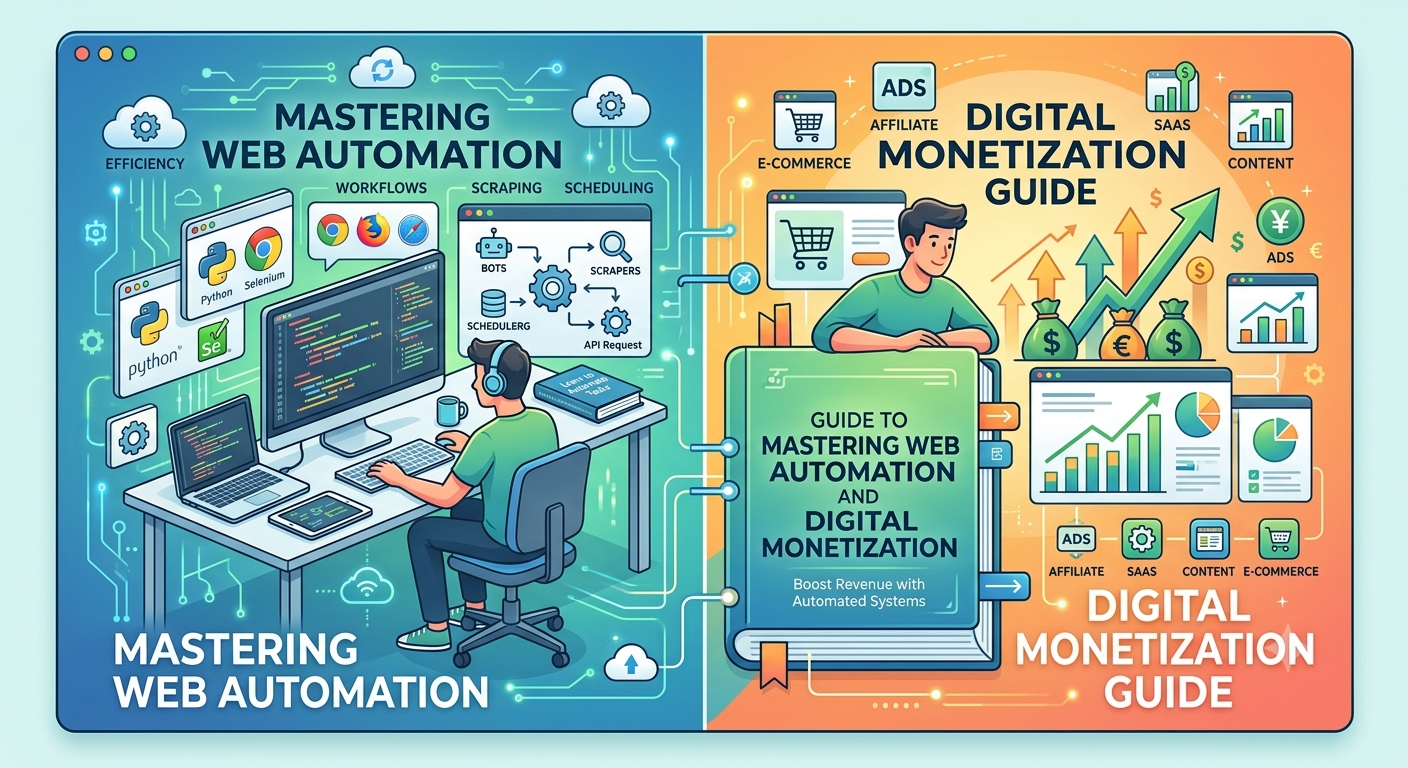
Web automation helps people use software and scripts to complete online tasks with less effort. Digital monetization helps people earn income from websites, apps, online services, and digital products. When you combine these two skills, you create a strong path for growth in the online world.
Today, many businesses use automation to save time and improve work quality. At the same time, creators, marketers, and entrepreneurs use digital monetization to build income streams. As a result, these skills play a key role in modern online business.
Mastering Web Automation and Digital Monetization is one of the most powerful and valuable strategies for building scalable online income. It helps people increase productivity, improve efficiency, and create new revenue opportunities.
Understanding Web Automation
What Web Automation Means
Web automation uses tools, scripts, and software to perform online tasks without manual work. For example, automation can collect data, send emails, update records, and manage online processes.
Many companies use automation because it reduces repetitive work. As a result, teams focus on planning, growth, and customer service. This creates better business performance.
Core Functions of Web Automation
Automation systems perform many useful tasks. They can monitor websites, process information, and move data between platforms. Therefore, businesses complete projects faster. Look, automation also helps reduce human mistakes. When systems follow clear rules, they deliver consistent results. This improves accuracy and efficiency.
Essential Web Automation Tools
Browser Automation Platforms
Browser automation tools interact with websites like human users. These tools can click buttons, fill forms, and navigate web pages. Popular solutions support testing, data collection, and workflow automation. As a result, businesses improve speed and reliability in daily operations.
Workflow Automation Software
Workflow platforms connect different online services. For example, they move information from one application to another without manual effort. Trust me, this process saves many hours each week. Teams spend less time on repetitive work and more time on important tasks.
Benefits of Web Automation
Increased Productivity
Automation handles repetitive activities quickly. Therefore, employees focus on strategic goals instead of routine actions. Businesses often complete projects faster when automated systems manage common processes. This creates stronger operational performance.
Better Accuracy
Automated workflows follow predefined instructions. As a result, data remains consistent across systems. Bro, fewer mistakes mean fewer corrections. This saves resources and supports better decision-making.
Steps to Build a Web Automation Strategy
Step 1: Identify Repetitive Tasks
Start by finding tasks that repeat every day. These activities often provide the best automation opportunities. Examples include data entry, report creation, email distribution, and website monitoring. Therefore, businesses gain quick improvements.
Step 2: Select Suitable Tools
Choose tools that match your goals. Some platforms support browser actions, while others focus on workflow management. Look, tool selection affects long-term success. Good software creates reliable automation processes.
Step 3: Test and Improve
Testing helps identify issues before full deployment. As a result, businesses avoid costly problems. Regular updates keep automation systems effective. Therefore, performance remains strong over time.
Introduction to Digital Monetization
What Digital Monetization Means
Digital monetization converts online activities into revenue. This includes websites, blogs, applications, videos, courses, and digital services. Many creators use monetization strategies to generate income from valuable content. As a result, online businesses continue to grow.
Why Monetization Matters
Monetization creates financial returns from digital assets. Therefore, businesses earn income while serving users. You know, successful monetization supports growth and long-term sustainability.
Popular Digital Monetization Models
Advertising Revenue
Advertising remains a common monetization method. Website owners earn money when visitors view or click advertisements. This model works well for websites with strong traffic and valuable content.
Affiliate Marketing
Affiliate marketing promotes products or services through special links. Businesses pay commissions for successful referrals. As a result, content creators earn income without creating products themselves.
Digital Products
Digital products include ebooks, templates, software, and online courses. These products often generate recurring revenue. Trust me, many entrepreneurs choose digital products because they scale well.
Digital Monetization Comparison
| Monetization Method | Startup Cost | Income Potential | Scalability |
| Advertising | Low | Medium | High |
| Affiliate Marketing | Low | High | High |
| Digital Products | Medium | High | Very High |
| Subscription Services | Medium | High | High |
Connecting Automation with Monetization
Automated Lead Generation
Automation tools collect and organize customer information. Therefore, businesses improve marketing efficiency. Lead generation systems support growth by creating a steady flow of potential customers.
Automated Content Distribution
Content distribution platforms publish information across multiple channels. As a result, businesses reach larger audiences. Like, one piece of content can appear on several platforms through automation.
Automated Customer Engagement
Automation helps businesses communicate with users through email sequences and support workflows. This creates consistent customer experiences and stronger relationships.
Revenue Growth Through Automation
| Automation Area | Business Benefit | Revenue Impact |
| Email Marketing | Better engagement | Higher sales |
| Lead Management | More qualified leads | Increased conversions |
| Data Analysis | Better decisions | Revenue growth |
| Content Publishing | Wider reach | More traffic |
SEO and Automation
Automated SEO Tasks
Automation helps manage keyword tracking, site monitoring, and performance reporting. Therefore, businesses save time. Many organizations use automation to maintain SEO consistency across large websites.
Supporting Search Visibility
Automation supports content management and technical improvements. As a result, websites maintain strong search performance. Bro, good visibility helps attract more visitors and opportunities.
Data Analytics and Performance Tracking
Measuring Results
Analytics tools monitor traffic, conversions, and engagement. Therefore, businesses understand performance clearly. Data helps teams make informed decisions and improve strategies.
Using Insights for Growth
Performance reports reveal strengths and weaknesses. As a result, businesses refine automation and monetization systems. Look, continuous improvement supports long-term success.
Security and Compliance
Protecting User Data
Businesses must protect customer information. Strong security measures reduce risks and support trust. Data protection remains a key requirement for online operations.
Following Regulations
Organizations should follow privacy laws and industry standards. Therefore, businesses avoid legal issues and maintain credibility. Trust me, compliance supports sustainable growth.
Future Trends in Web Automation
Artificial Intelligence Integration
AI helps automation systems make smarter decisions. As a result, businesses improve efficiency and accuracy. Modern tools continue to expand automation capabilities.
Advanced Personalization
Personalized experiences improve customer satisfaction. Therefore, businesses build stronger connections with users. Many platforms now combine automation with customer behavior data.
Building Long-Term Success
Focus on Value
Successful businesses provide useful solutions. Therefore, customers continue to engage and purchase products. Strong value creates sustainable growth.
Continue Learning
Technology changes over time. As a result, ongoing education remains important. You know, learning new skills helps businesses stay competitive.
FAQ’s
What is web automation?
Web automation uses software, scripts, and tools to complete online tasks automatically. It helps reduce manual work and improves efficiency.
What is digital monetization?
Digital monetization is the process of earning income from online content, services, products, websites, or applications.
Can beginners learn web automation?
Yes. Beginners can start with simple automation tools and gradually learn more advanced workflows and scripting methods.
Which monetization method works best?
The best method depends on business goals. Affiliate marketing, digital products, subscriptions, and advertising all offer strong opportunities.
How does automation increase revenue?
Automation improves efficiency, supports lead generation, enhances marketing efforts, and helps businesses reach more customers with less effort.
Conclusion
Web automation helps businesses save time, reduce repetitive work, and improve productivity. At the same time, digital monetization creates opportunities to earn income from online assets. Together, these strategies support modern business growth.
Automation improves efficiency across marketing, operations, analytics, and customer engagement. As a result, organizations achieve stronger performance and better resource management. Digital monetization then converts these improvements into measurable revenue.
Businesses that combine automation with smart monetization strategies build scalable systems for long-term success. Therefore, continuous learning, strong planning, and consistent execution remain important for future growth.