
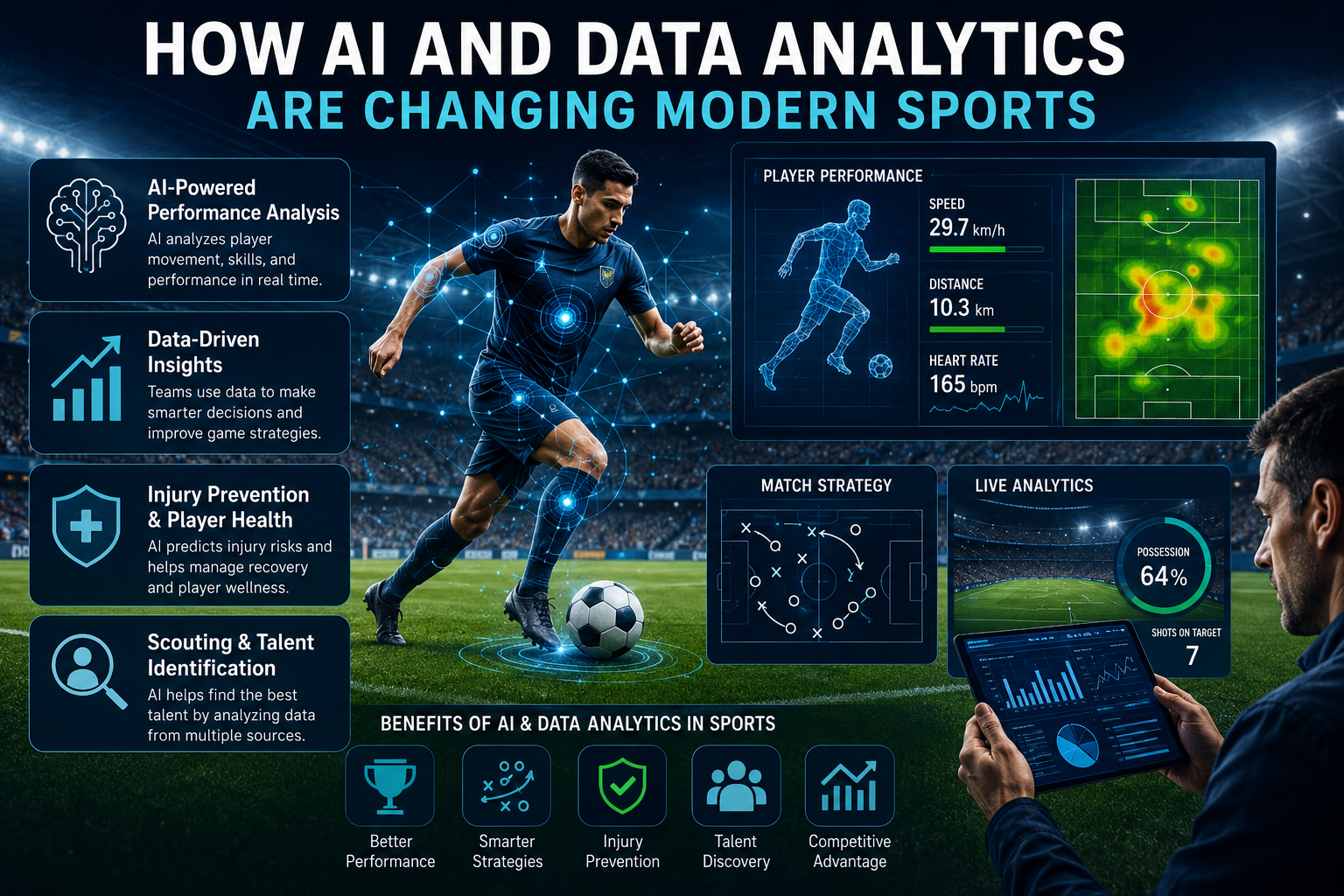
Sports continue to change with new technology. Today, teams collect huge amounts of information from games and training sessions. AI and data analytics help coaches, players, and clubs understand that information. As a result, they make better choices on and off the field.
AI means machines can learn patterns from data. Data analytics means studying information to find useful facts. Together, these tools improve training, performance, health, and fan engagement. The sports world now depends on technology more than ever.
The sports industry uses cameras, sensors, wearable devices, and software to gather data. Then AI systems process that data and provide insights. This process helps teams gain an advantage over competitors.
What Is Artificial Intelligence in Sports
Artificial Intelligence refers to computer systems that learn from information and make predictions. In sports, AI studies player movements, game statistics, and performance records. Then it provides useful recommendations.
AI tools can identify strengths and weaknesses in players. Coaches use these insights to improve training plans. As a result, athletes can focus on areas that need improvement.
Today, many professional teams use AI software. Look, this technology supports faster decisions and deeper analysis. It also helps teams understand patterns that people may miss.
Understanding Data Analytics in Sports
Data analytics focuses on collecting and studying sports information. Teams gather data from matches, practices, and fitness sessions. Then analysts turn raw numbers into useful reports.
Performance metrics include speed, distance covered, passing accuracy, and shooting efficiency. These measurements help coaches understand player contributions. Therefore, teams can build stronger strategies.
You know, data analytics has become a key part of sports management. From football to basketball and cricket, clubs use data to improve results and reduce mistakes.
Why Sports Teams Use AI and Data Analytics
Sports organizations seek every possible advantage. AI and analytics provide clear insights that support better decisions. Teams use these tools to improve player performance and game outcomes.
Data helps coaches create customized training programs. At the same time, management teams use analytics for scouting and recruitment. This approach increases efficiency across the organization.
Trust me, the most powerful example of How AI and Data Analytics Are Changing Modern Sports comes from the ability to turn millions of data points into valuable actions. This technology creates one of the greatest competitive advantages in modern sports.
AI for Player Performance Tracking
Player tracking has become a major part of sports technology. AI systems collect information during training and matches. Then they analyze movement, effort, and skill execution.
Teams use these insights to improve performance. Players gain a better understanding of their strengths and weaknesses. As a result, they can train with greater focus.
Wearable Technology and Smart Devices
Athletes wear smart watches, GPS trackers, and fitness sensors. These devices record heart rate, speed, distance, and workload. Coaches review the data after each session.
The collected information helps training staff understand player conditions. Therefore, teams can adjust workloads and prevent fatigue. This creates a safer training environment.
Real-Time Performance Monitoring
Real-time monitoring gives instant feedback during games and practice. Coaches receive updates through tablets and software dashboards. Then they make quick decisions.
For example, a coach can see if a player shows signs of fatigue. As a result, substitutions become more effective. This process improves overall team performance.
Data Analytics for Better Coaching Decisions
Modern coaches rely on evidence instead of guesswork. Data analytics provides detailed reports on player and team performance. Therefore, coaches gain a clearer picture of what works best.
Analytics also helps identify successful tactics. Teams study possession rates, passing patterns, and defensive actions. Then they develop strategies based on facts.
Bro, this approach reduces uncertainty. Coaches can make informed choices that increase the chance of success during competition.
Injury Prevention and Athlete Health
Athlete health remains a top priority in sports. AI systems help medical teams monitor physical condition and workload. This information reduces injury risks.
By studying movement patterns and training intensity, AI can detect warning signs. Then teams take action before a serious problem develops.
As a result, players stay available for more matches. Healthy athletes contribute more consistently throughout the season.
Predicting Injury Risks
AI analyzes historical injury data and current fitness levels. Then it identifies patterns linked to injuries. Medical staff use this information to create prevention plans.
This process helps reduce muscle strains and overuse injuries. Therefore, teams protect valuable players and maintain strong performance levels.
Recovery Management
Recovery plays an important role in athletic success. AI monitors sleep, workload, and recovery metrics. Then it suggests suitable recovery plans.
Players receive personalized recommendations. As a result, they return to competition in better condition and with lower risk.
AI in Match Strategy and Game Planning
Teams use AI to study opponents before competitions. The software analyzes past matches and identifies trends. Then coaches prepare effective strategies.
AI can highlight defensive weaknesses and attacking opportunities. Therefore, teams enter games with detailed plans. This preparation improves confidence and execution.
Like many modern tools, AI helps simplify complex information. Coaches receive clear insights that support tactical decisions.
Fan Experience and Sports Entertainment
Sports organizations also use AI to improve fan experiences. Personalized content helps supporters receive updates that match their interests.
AI recommends highlights, articles, and match information. As a result, fans enjoy more engaging experiences across digital platforms.
Teams also use analytics to understand audience behavior. Therefore, they create better marketing campaigns and stronger fan connections.
AI in Sports Broadcasting
Broadcasters use AI to create detailed game analysis. Automated systems generate statistics and highlight important moments. This improves viewing experiences.
AI can also support camera tracking and content production. As a result, broadcasts become more informative and engaging.
Fans receive deeper insights during live events. Therefore, they gain a better understanding of player and team performance.
Recruitment and Talent Scouting
Scouting has changed significantly through data analytics. Teams now evaluate players using performance metrics and statistical models.
Scouts review information from many leagues and competitions. Then AI highlights players with strong potential. This process saves time and resources.
Look, clubs can identify hidden talent more effectively. As a result, recruitment decisions become more accurate.
Key Uses of AI in Sports
| Area | AI Application | Benefit |
| Training | Performance analysis | Better player development |
| Health | Injury prediction | Reduced injury risk |
| Coaching | Tactical analysis | Improved decisions |
| Scouting | Talent identification | Better recruitment |
| Broadcasting | Automated highlights | Enhanced viewing experience |
Data Collected in Modern Sports
| Data Type | Purpose |
| Heart Rate | Fitness monitoring |
| Speed | Performance measurement |
| Distance Covered | Workload analysis |
| Sleep Data | Recovery tracking |
| Match Statistics | Tactical evaluation |
Challenges of AI in Sports
Despite many benefits, challenges still exist. Data privacy remains an important concern. Teams must protect player information carefully.
Technology costs can also create barriers. Smaller organizations may struggle to invest in advanced systems. Therefore, adoption rates vary across different levels of sports.
Accuracy also depends on data quality. Poor information can lead to incorrect conclusions. For this reason, teams need reliable data sources.
Future of AI and Data Analytics in Sports
The future looks promising for sports technology. AI systems continue to improve each year. New tools will provide deeper insights and faster analysis.
Advanced sensors and smart equipment will collect more information. Then AI platforms will process that data with greater accuracy. As a result, teams will gain even better performance insights.
Data-driven decision making will continue to grow. Therefore, technology will remain a central part of modern sports success.
FAQ’s
What is AI in sports?
AI in sports uses computer systems to analyze data, identify patterns, and support decisions related to performance, health, strategy, and scouting.
How does data analytics help athletes?
Data analytics helps athletes understand performance metrics such as speed, workload, fitness, and efficiency. This information supports better training plans.
Can AI prevent sports injuries?
AI can identify injury risks by studying workload, movement patterns, and fitness data. Teams then take preventive actions to reduce risk.
Why do coaches use sports analytics?
Coaches use analytics to evaluate tactics, player performance, and opponent strategies. This helps them make informed decisions.
What is the future of AI in sports?
The future includes smarter tracking systems, advanced performance analysis, personalized training programs, and improved fan experiences through technology.
Conclusion
AI and data analytics have transformed modern sports. Teams use these tools to improve performance, strategy, and athlete health. As a result, sports organizations operate with greater efficiency.
Technology now supports coaches, players, scouts, and medical staff. Each group benefits from accurate information and valuable insights. Therefore, decisions become more informed and effective.
The future of sports will include even stronger connections between technology and competition. AI and analytics will continue to shape training, performance, and fan experiences across the global sports industry.