
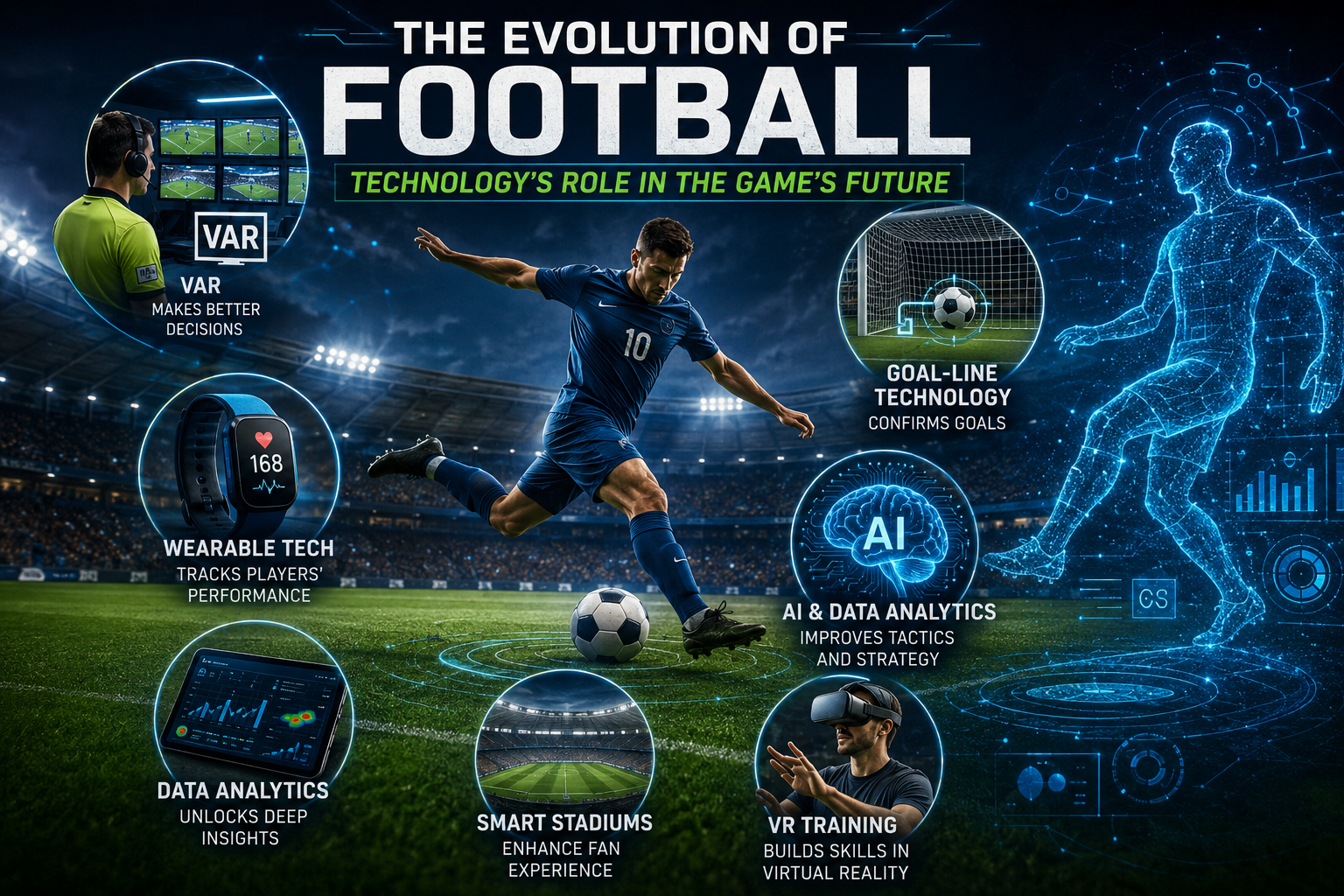
Football is the most popular sport in the world. Millions of people watch it every week. Players, coaches, and fans love the game because it brings skill, teamwork, and excitement together. Over time, football has changed in many ways. New rules, better training, and modern tools help the sport grow.
Today, technology plays a big role in football. It helps referees make better decisions, it helps players train with more data. It also gives fans a better viewing experience. As a result, football looks very different from the game people watched many years ago.
The Evolution of Football: Technology’s Role in the Game’s Future is one of the greatest changes in modern sports. You know, technology now touches almost every part of the game. From video reviews to smart tracking systems, football continues to move forward.
The Early Days of Football
Football started as a simple sport. Players used basic equipment and simple tactics. Coaches had few tools to study matches. Most decisions depended on human judgment.
Fans also had limited access to games. They often listened to radio broadcasts or read newspapers. As a result, information moved slowly. The game focused only on what happened on the field.
How Technology Entered Football
Technology entered football step by step. First, television changed how fans watched matches. People could enjoy games from their homes. This change helped football reach a larger audience.
Later, computers and digital tools entered the sport. Clubs started collecting data about players and matches. Coaches used this information to improve team performance. Consequently, football became more strategic.
Video Assistant Referee (VAR)
What VAR Does
VAR helps referees review important moments. Officials can check goals, penalties, red cards, and player identity mistakes. This system reduces major errors during matches.
Many leagues and tournaments now use VAR. It gives referees another chance to review key situations. Therefore, teams receive fairer decisions in many cases.
Benefits of VAR
VAR improves accuracy in football. Players and coaches gain more confidence in important decisions. It also helps reduce clear mistakes that can change match results.
Although debates still exist, many experts support the system. Look, no technology is perfect, but VAR helps create a more balanced game.
Goal-Line Technology
Goal-line technology checks whether the ball fully crosses the goal line. Cameras and sensors track the ball’s position in real time. The referee receives a quick signal when a goal occurs.
This system removes confusion during close goal situations. As a result, players and fans receive clear answers. Trust me, this technology solved many famous football problems.
Data Analytics in Football
Understanding Player Performance
Football clubs collect huge amounts of data. They track passes, shots, distance covered, and many other metrics. Coaches study this information to understand player strengths.
Data helps teams build better tactics. It also helps identify areas that need improvement. Therefore, clubs make smarter decisions.
Match Analysis
Analysts review match statistics after every game. They study patterns and team movements. This process helps coaches prepare for future opponents.
Data analysis creates a deeper understanding of football. Consequently, teams gain valuable insights that improve performance.
Smart Wearable Technology
Players now wear tracking devices during training. These devices measure speed, movement, and heart rate. Coaches use the information to monitor fitness levels.
Wearable technology helps reduce injury risks. It also supports better training plans. As a result, players stay healthier and perform at a higher level.
Artificial Intelligence in Football
Artificial intelligence continues to grow in football. AI systems analyze large amounts of data in a short time. Clubs use these insights to improve scouting and performance evaluation.
AI also supports tactical planning. Coaches receive detailed reports about opponents and player trends. Therefore, decision-making becomes stronger and more informed.
Technology and Injury Prevention
Injuries can affect a team’s success. Modern technology helps medical staff identify physical stress before serious problems develop. Sensors and monitoring tools provide useful health information.
Teams use recovery data to manage player workloads. This approach protects athletes throughout long seasons. Consequently, players spend more time on the field.
Football Broadcasting Innovations
Modern broadcasts offer better viewing experiences. High-definition cameras provide clear pictures. Multiple camera angles help fans understand important moments.
Streaming services also increase access to matches. Fans can watch games on phones, tablets, and computers. Therefore, football reaches audiences across the world.
Fan Engagement Through Technology
Technology creates stronger connections between clubs and supporters. Mobile apps provide news, statistics, and match updates. Fans can follow their favorite teams anytime.
Social media platforms also play a key role. Clubs share content and interact with supporters daily. As a result, fan engagement continues to grow.
Virtual Reality in Football Training
Virtual reality helps players practice game situations. Athletes can improve decision-making skills in simulated environments. This training method supports learning without physical strain.
Many clubs explore VR systems to improve performance. Broader use may appear in future seasons. Consequently, training methods continue to evolve.
Smart Stadium Development
Modern stadiums use advanced technology. Digital tickets, security systems, and cashless payments improve convenience. Fans enjoy smoother experiences during match days.
Smart stadium features also improve safety and efficiency. Therefore, clubs can serve large crowds more effectively.
Technology Used in Modern Football
| Technology | Main Purpose |
| VAR | Review key match decisions |
| Goal-Line Technology | Confirm goals |
| Wearable Devices | Track fitness data |
| AI Systems | Analyze performance |
| VR Training | Improve decision-making |
Benefits of Technology in Football
| Benefit | Impact |
| Better Refereeing | Fewer mistakes |
| Improved Training | Stronger performance |
| Injury Prevention | Healthier players |
| Better Fan Experience | Higher engagement |
| Smarter Analysis | Better tactics |
Challenges of Technology in Football
Technology brings many benefits, but some challenges remain. High costs can limit access for smaller clubs. Not every team can afford advanced systems.
Some fans also prefer traditional football. They feel technology interrupts the natural flow of the game. Therefore, football organizations must find the right balance.
The Future of Football Technology
Football technology will continue to grow. AI, machine learning, and advanced tracking systems will become more common. Clubs will gain deeper insights into player performance.
Future innovations may create new ways to train athletes and engage fans. As a result, football will continue to evolve while keeping its core spirit.
FAQ’s
What is VAR in football?
VAR stands for Video Assistant Referee. It helps officials review important decisions such as goals, penalties, and red cards.
How does goal-line technology work?
Goal-line technology uses cameras and sensors to determine whether the ball fully crosses the goal line.
Why do football teams use data analytics?
Teams use data analytics to study performance, improve tactics, and make better decisions about players.
How do wearable devices help players?
Wearable devices track movement, speed, and fitness data. Coaches use this information to improve training and reduce injury risks.
What future technologies may shape football?
Artificial intelligence, virtual reality, advanced analytics, and smart stadium systems may shape the future of football.
Conclusion
Football continues to change with technology. New tools improve refereeing, player development, and fan experiences. As a result, the sport becomes more accurate and engaging.
Technology also helps clubs make smarter decisions. Data analytics, wearable devices, and AI provide valuable information. Therefore, teams can improve performance and protect player health.
The future of football looks exciting. New innovations will continue to shape the game. At the same time, football will keep its passion, teamwork, and global appeal for generations to come.